


Rick Steves’ Art of Europe
PBS Western Reserve (WNEO 45.1 / WEAO 49.1):
Mondays at 10 PM beginning July 6
Tuesdays at 3 AM beginning July 7
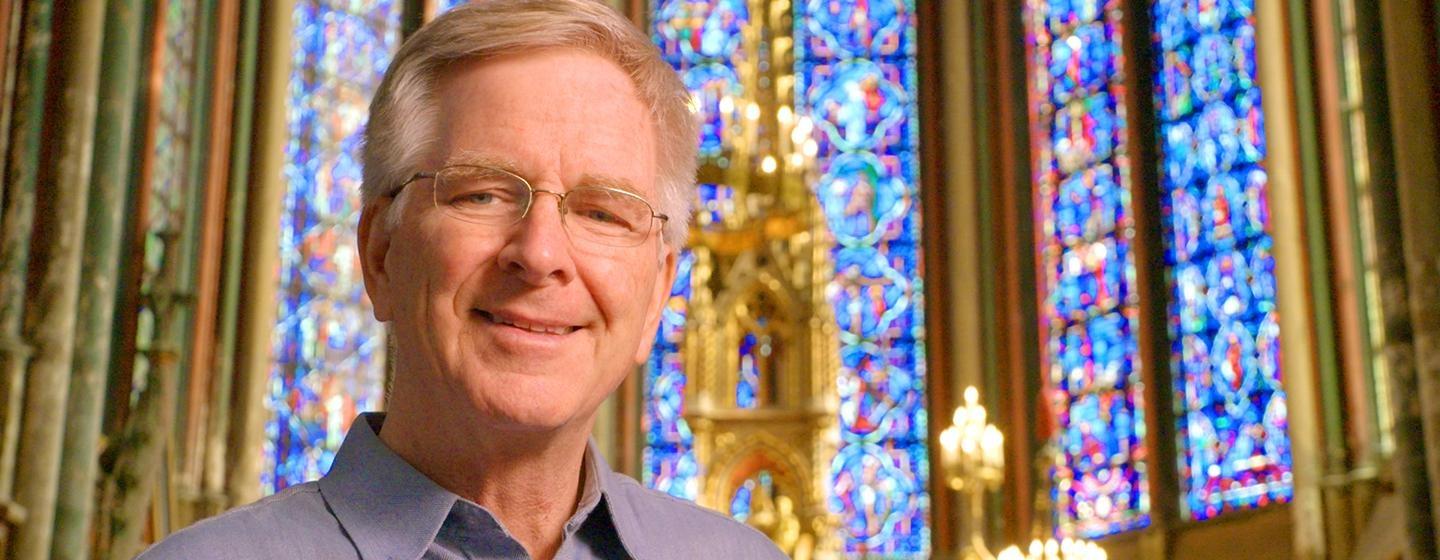
RICK STEVES’ ART OF EUROPE is the culmination of Rick showcasing Europe's great art and architecture on public television for three decades. This ambitious, six-part sweep through the span of European art history weaves the greatest masterpieces into a fascinating story that's both entertaining and inspiring. Climbing deep into prehistoric tombs on remote Scottish isles, summiting Michelangelo's magnificent dome at the Vatican, waltzing through glittering French palaces, and pondering the genius of Picasso and Van Gogh, Rick does for art what he does for travel — makes it fun and accessible.
Stream RICK STEVES’ ART OF EUROPE.
Episode 1
Stone Age to Ancient Greece
As the Ice Age glaciers melted, European civilization was born—and with it, so was art. From the Stone Age came prehistoric art: mysterious tombs, mighty megaliths, and vivid cave paintings. Then the Egyptians and the Greeks laid the foundations of Western art—creating a world of magical gods, massive pyramids, sun-splashed temples, and ever-more-lifelike statues.
Episode 2
Ancient Rome
The Romans gave Europe its first taste of a common culture—and awe-inspiring art. From its groundbreaking architecture to its statues, mosaics, and frescos, Rome engineered bigger and better than anyone before. At its peak, the Roman Empire was a society of unprecedented luxury, with colossal arenas for entertaining the masses and giant monuments to egotistical emperors. And then it fell.
Episode 3
The Middle Ages
After Rome fell, Europe spent a thousand years in its Middle Ages. Its art shows how the light of civilization flickered in monasteries and on Europe’s fringes: Christian Byzantium, Moorish Spain, and pagan Vikings. Then, around A.D. 1000, Europe rebounded. The High Middle Ages brought majestic castles, radiant Gothic cathedrals, and exquisite art that dazzled the faithful and the secular alike.
Episode 4
The Renaissance
Around 1400, Europe rediscovered the aesthetics of ancient Greece and Rome. This rebirth of classical culture showed itself in the statues, paintings, and architecture of Florence, then spread to Spain, Holland, Germany, and beyond. The Renaissance—from art-loving popes to Leonardo’s Mona Lisa and Michelangelo’s David—celebrated humanism and revolutionized how we think about our world.
Episode 5
Baroque
In the 1600s and 1700s, the art of "divine" kings and popes—and of revolutionaries and Reformers—tells the story of a Europe in transition. In the Catholic south, Baroque bubbled over with fanciful decoration and exuberant emotion. In the Protestant north, art was more sober and austere. And in France, the excesses of godlike kings gave way to revolution, Napoleon, and cerebral Neoclassicism.
Episode 6
The Modern Age
In the 1800s, the Industrial Revolution spawned new artistic styles: idealized Romanticism, light-chasing Impressionism, sensuous Art Nouveau. Then Europe’s tumultuous 20th century inspired rule-breaking art as exciting as the times: from Expressionism and Cubism to Surrealism to Abstract. The genius of artists like Van Gogh, Picasso, and Dalí express the complexity of our modern world.