


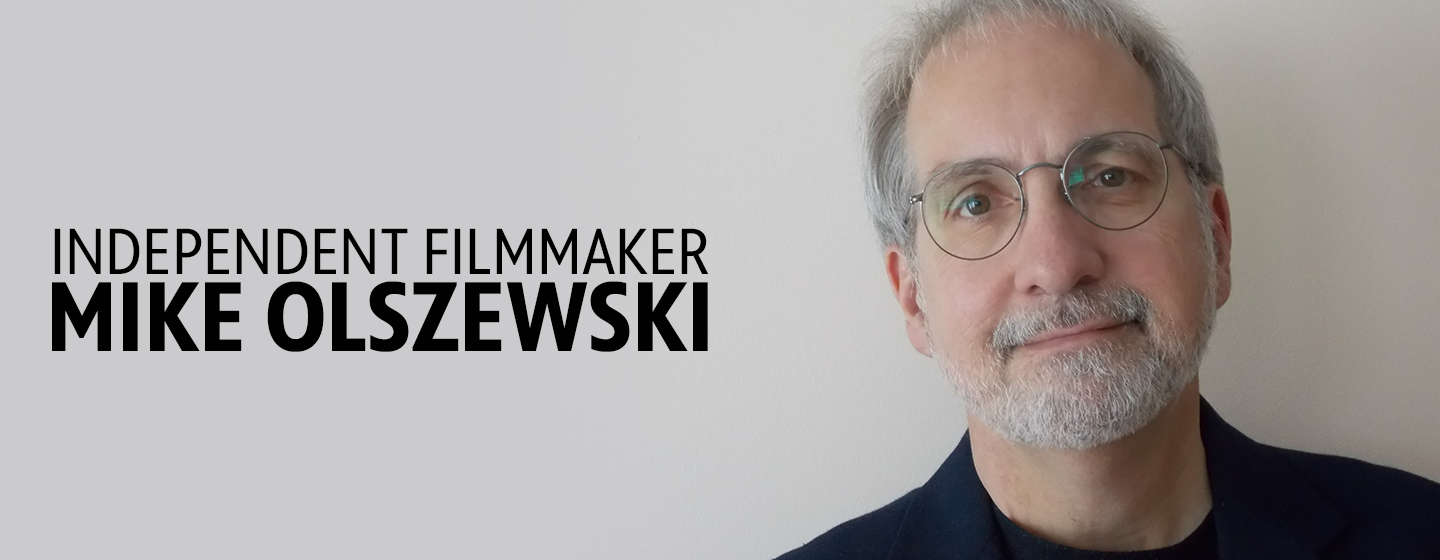
Mike Olszewski is an independent filmmaker and the Emmy-winning scriptwriter of the two-part short-film series, “Digitizing History.” Mike is a multi-talented author, radio personality and educator. He has been in the television industry since 1994 with a focus on local stories and pop culture. His prior work with PBS Western Reserve includes the 2008 documentary “Radio Daze: Cleveland’s FM Air Wars,” based on his book of the same name.
“Digitizing History” tells the story of Cleveland’s Cinecraft Productions and their efforts to restore and digitize their catalogue of films alongside the Hagley Museum, revealing a window into 20th-century Northeast Ohio. The two-part series is now available to stream on the free PBS App, YouTube and PBSWesternReserve.org.
Q: You worked on this project with a team of collaborators. What is your role?
A: We all wear a lot of hats. I knew Matt Pallotta years ago when we both taught at Kent State University. He’s a tremendously talented videographer, extremely creative, and we share a passion for pop culture and telling great stories. Matt, my wife Janice, and I will discuss story ideas, and when we determine what we’d like to do, we all get busy doing research. I do most of the writing with input from both Janice and Matt. We’ve all had some influence on each other, and it's great fun working together.
Q: How did the story of Cinecraft come to your attention?
A: I first proposed a documentary based on a book that Janice and I wrote about Cleveland’s kid show hosts. Janice came upon the Hagley Museum page while pouring over internet sites, found some rare footage, and it led to Cinecraft in Cleveland. Cinecraft had over a hundred years of vintage films and did a lot of production for local companies as well as early TV. They had a treasure trove of film in their building and contacted the restoration team at Hagley in Delaware about preserving the collection.
Q: Cinecraft Productions is the oldest industrial film company in the nation. Can you explain what “industrial” films are?
A: Industrial films are usually work for hire to educate or even persuade a select audience. Facts are essential, but here’s where Cinecraft stands apart from other studios: they know how to tell a story, and they’ve been doing that for more than a century. They weave the necessary elements into a memorable presentation. Plus, the talented eye of their camera operators and film editors gave the audience a unique perspective that made their topics meaningful and noteworthy.
A great example is their 1924 film, “The Heart of Cleveland.” It was a film commissioned by the Cleveland Electric Illuminating Company. It turned into a fascinating record of what life was like in Northeast Ohio a hundred years ago, an invaluable historic document. So many of Cinecraft’s films fall into that category, and we all benefit as a result. They’re remarkable, generous people who produce industrial and other films as art and see the importance of preserving this catalog of work.
Q: What do you think has made Northeast Ohio a sustainable home for Cinecraft?
A: Cinecraft’s success in Northeast Ohio was the result of visionaries. Neil McCormick told us the amazing story of how Ray and Betty Culley and their remarkable team used their filmmaking experience that started in California and brought it north to Ohio. Then a much bigger city, Cleveland, offered great opportunities, and Cinecraft ran with the ball. Plus, Frank Siedel’s long-running “The Ohio Story” series managed to inform and entertain at the same time. In its own way, Cinecraft helped TV gain an early foothold in the state. They produced high-quality programming for an eager and very receptive audience.
Q: When you were reviewing the vintage footage, did any films become a favorite of yours? Or is there a particular era of filmmaking or advertisements that you’re most interested in?
A: The Cinecraft collection at Hagley caused a problem for me, but it was my own doing. Once I had access, I sat down one early evening and started reviewing the films. As the night wore on, I was finding new stuff and kept saying to myself, “Okay, just one more.” I said that over and over until early morning!
I’m part of the first TV generation, so the Ohio Bell ads with Tim Conway and Ernie Anderson were immediate favorites. Plus, Linn Sheldon was a dear friend. You knew him better as TV’s Barnaby, but seeing a film of him as a previous character called Uncle Leslie was like finding the Holy Grail. Then, other TV-related stuff like the original opening for Captain Penny, Louise Winslow (the Martha Stewart of her day), “The Ohio Story” and early films starring Merv Griffin and Joe E. Brown, among others, turned into a long and wonderful night ahead.
Q: What do you hope people will learn from these short films?
A: Every community across the U.S. has its own unique personality based on location, talented people, ethnicity and any number of factors that combine into sort of a historical tapestry. Northeast Ohio is so fortunate because Cinecraft had the foresight to capture so many of those important stories and events, the Hagley Museum played a vital role in preserving their work, and we can’t forget PBS Western Reserve presenting the results of those efforts. It’s a sort of harmonic convergence, giving us a window to the past and how it influences us today.
Q: Why did you choose a public media organization like PBS Western Reserve for distribution?
A: When Matt, Janice and I started discussing our projects, PBS Western Reserve was always our first choice. Matt and I had worked in commercial TV and recognized it had different priorities. That’s not something that’s necessarily bad. It’s just the reality of commercial media. Years ago, I’d worked with some other talented videographers on a documentary based on my book “Radio Daze.” We never looked back. The station set the bar pretty high as far as quality and content and were supportive right from the start. The encouragement and cooperation from folks like Gary Manke, Ryan Donchess and so many others was inspiring. They aired the documentary a number of times, it won an Emmy, and we all said these are the folks we want to work with.
There’s another important reason. We all have a common goal with PBS Western Reserve. We just want to present the best stories and it’s a matter of trust and confidence shared by us all. When we say we are going to accomplish something or provide a service, we follow through. Same thing with the folks at Cinecraft and the Hagley Museum. We work on a handshake and none of us will ever violate that trust. It’s extremely rare to find that kind of working relationship, and so many over the course of their careers never have that experience. We have a great partnership, and we want that to continue for a long time to come.